



Building India’s Green Fortress: Why Domestic Manufacturing is the Cornerstone of Renewable Energy Success – EQ



In Short : India’s renewable energy expansion hinges on domestic component production. Local manufacturing of solar panels, wind turbines, and batteries can cut import reliance (currently 70% for solar), create jobs, and reduce costs. While PLI schemes boosted module capacity to 25 GW, cell production lags at 3 GW. Achieving 500 GW by 2030 requires complete value-chain development and skilled workforce training.
In Detail : India’s renewable energy sector stands at a crucial juncture where the focus must shift from mere capacity addition to building a robust domestic manufacturing ecosystem. The country’s ambitious target of 500 GW renewable energy by 2030 cannot be sustainably achieved without strong indigenous production capabilities for solar panels, wind turbines, and energy storage systems. Currently, India imports about 70% of its solar equipment, primarily from China, creating strategic vulnerabilities in its energy security.
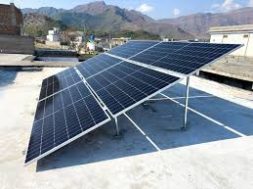
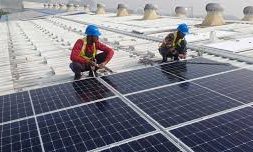
The solar sector presents both progress and challenges in local manufacturing. While India has developed 25 GW of module manufacturing capacity through production-linked incentive (PLI) schemes, cell production remains limited to just 3 GW. This gap in the value chain means most manufacturers still import solar cells before assembling them into modules domestically. The wind energy sector shows better indigenization but needs revival after years of slowdown, requiring technological upgrades to meet modern turbine demands.
Energy storage systems represent another critical frontier for domestic manufacturing. As renewable penetration increases, battery storage becomes essential for grid stability. While battery assembly units are emerging, cell manufacturing – the core technology – remains concentrated in China and South Korea. Developing this capability will require significant investment in R&D and raw material processing, particularly for lithium-ion and alternative chemistries suitable for India’s tropical conditions.
The economic benefits of localizing renewable component manufacturing are substantial. Every gigawatt of locally manufactured capacity can generate approximately 30,000 direct and indirect jobs across factories, supply chains, and services. Complete value-chain development would not only reduce import bills (potentially saving $42 billion by 2030) but also position India as a global export hub for renewable equipment, especially to markets in Africa and Southeast Asia.
Policy interventions must address several challenges to make domestic manufacturing competitive. These include providing long-term demand visibility to manufacturers, ensuring raw material security, and implementing balanced trade policies that protect domestic industry without making renewable projects unviable. The existing PLI schemes need expansion to cover more components, while skill development programs must prepare workers for high-tech manufacturing jobs in the green energy sector.
Looking ahead, India’s renewable energy transition must be coupled with an equally ambitious manufacturing revolution. This dual approach will ensure energy security, create employment, and give India greater control over its clean energy future. As global supply chains reconfigure, India has a narrow window to establish itself as a renewable manufacturing powerhouse before technological standards and market positions become entrenched. The success of this manufacturing push will ultimately determine whether India’s renewable energy growth remains dependent or becomes truly self-reliant.
