








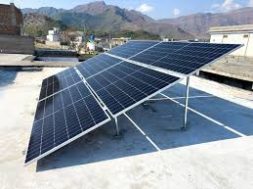
In Short : Goa Chief Minister Pramod Sawant ruled out floating solar panels on dams, citing environmental concerns like water contamination. Instead, the state is considering installing solar panels on land along irrigation canals. A proposal has been requested from Indian Oil Corporation for a 336 MW canal-based solar project, aiming to promote clean energy without harming water bodies or agriculture.
In Detail : Goa Chief Minister Pramod Sawant has announced that the state government will not pursue the installation of floating solar panels on dams. The decision comes in light of concerns over potential environmental impacts, particularly the risk of contaminating water bodies that are crucial for irrigation and drinking purposes.
Instead of utilizing dam surfaces, the government is exploring alternative locations for solar energy generation. One of the primary options under consideration is installing solar panels on land adjacent to the state’s irrigation canals, which allows the state to tap into solar power without disturbing aquatic ecosystems.
Sawant emphasized that the shift in strategy aligns with the government’s broader commitment to sustainable development. By avoiding the use of dam surfaces, the government aims to protect sensitive ecological areas while still making progress in its renewable energy goals.
To take this initiative forward, the Goa government has requested Indian Oil Corporation Limited (IOCL) to submit a proposal for a canal-based solar power project. The proposed project is expected to have a capacity of 336 megawatts, making it a significant addition to the state’s clean energy portfolio.
Officials believe that installing solar panels along canals is not only an environmentally safer option but also a more efficient use of otherwise underutilized land. These canal-side installations can help in reducing evaporation from water bodies while generating clean electricity.
This approach supports the state’s strategy to increase renewable energy adoption without compromising natural resources or agricultural productivity. The canal-based model could serve as a replicable example for other regions with similar geographic and ecological constraints.
