


Haryana Targets 2.2 Lakh Rooftop Solar Units and Complete Government Building Solarisation by 2027 – EQ









In Short : Haryana plans to install 2.2 lakh rooftop solar systems under the PM Surya Ghar Yojana by FY 2026-27 and solarise all 4,523 government buildings by December 2027, tapping 122 MW potential. Financial aid will support adoption, with special State assistance for 1 lakh Antyodaya families, credited quickly to encourage faster implementation across the state.
In Detail : Haryana has outlined an ambitious plan to accelerate solar adoption across the state over the next few years. A key target is the installation of 2.2 lakh rooftop solar systems under the PM Surya Ghar: Muft Bijli Yojana by the financial year 2026-27. This large-scale rollout aims to significantly boost the state’s renewable energy capacity.
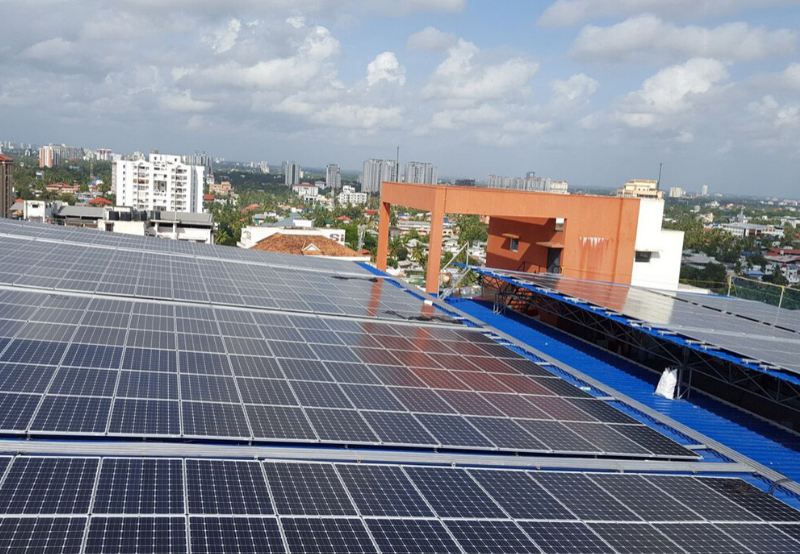
Alongside this, the state government will solarise all 4,523 surveyed government buildings by December 31, 2027. These buildings together have an estimated rooftop solar potential of 122 MW, which, once harnessed, will contribute substantially to reducing the state’s dependence on conventional energy sources.
The solarisation of government buildings will be undertaken without relying on Central Financial Assistance, demonstrating Haryana’s commitment to self-funding its renewable energy goals. This move is expected to serve as a model for other states aiming to integrate clean energy in public infrastructure.
For residential adoption, Haryana is facilitating access to financial support under the PM Surya Ghar Yojana. Central Financial Assistance will be credited to beneficiaries within 15 days of approval to ensure timely project execution and encourage participation from households across the state.
In addition to central aid, the state government will provide its own financial assistance for one lakh Antyodaya families. This support will be allocated on a first-come, first-serve basis, targeting lower-income households that might otherwise face challenges in adopting rooftop solar.
Officials highlight that rooftop solar systems not only cut electricity bills but also generate surplus power that can be supplied back to the grid. This creates opportunities for additional income for households while strengthening the state’s power supply.
The scheme also aims to promote energy independence at the community level. By empowering citizens to produce their own electricity, Haryana is reducing vulnerability to energy price fluctuations and fostering a more resilient power system.
The combination of widespread rooftop installations and solarised government buildings will also help Haryana reduce its carbon footprint in line with national climate goals. These measures are aligned with India’s broader renewable energy targets for 2030.
With these initiatives, Haryana is positioning itself as a leader in decentralized renewable energy deployment, setting benchmarks in both public sector solarisation and household-level participation in the clean energy transition.
