



In the matter of Aggregate Revenue Requirement, Tariff and Investment Plan for FY 2025-26 of JVVNL, AVVNL and JdVVNL – EQ



Summary:
—
## **1. Financial Health of Discoms & Rationale for Tariff Structure**
The Commission notes that **50% of Discoms’ costs are fixed**, but **only 17% of revenue** is recovered through fixed charges, creating a mismatch that weakens Discom finances and leads to borrowing burdens on consumers in the long term.
To address this, the Commission emphasizes adopting a **cost-reflective tariff** aligned with the National Tariff Policy and Section 61(g) of the Electricity Act, ensuring both consumer protection and recovery of actual supply costs.
—
## **2. Tariff Proposals & Adjustments**
Discoms initially proposed increasing certain domestic tariffs but later withdrew these proposals after stakeholder feedback, keeping small domestic/BPL energy charges unchanged at the existing rate.
Voltage rebates and other surcharges (power factor, demand, voltage rebate etc.) will continue as per existing rules unless explicitly changed.
—
## **3. Regulatory Surcharge & Cross-Subsidy Charges**
A **Regulatory Surcharge** is proposed to liquidate accumulated revenue gaps, following Electricity Act and RERC regulations. A ceiling of **₹1.00/kWh** is proposed, with a lower rate of **₹0.70/kWh** for low-consuming domestic users.
Stakeholders have raised concerns about **Additional Surcharge**, cross-subsidy, and open-access calculations, but Discoms maintain these are computed per existing Commission methodologies.
—
## **4. Distribution Losses & Efficiency Targets**
Actual distribution losses for FY23–24:
* JVVNL: **15.77%**
* AVVNL: **10.82%**
* JdVVNL: **23.58%** (lagging significantly)
Commission-approved loss targets for FY25–26 remain strict:
* JVVNL: **14%**
* AVVNL: **7.5%**
* JdVVNL: **15%**
—
## **5. Revenue Position at Existing Tariff**
For FY 2025–26, Discoms collectively show a **surplus of ₹8,521 crore** at existing tariff levels when accounting for grants, FSA, and loss subsidy under the FRBM scheme.
—
## **6. Cross-Subsidy Levels**
Average cost of supply (ACoS) is calculated at **₹7.88 per unit** for FY 2025–26.
Cross-subsidies vary widely among categories—
Example:
* Domestic: **–5.77%**
* Non-Domestic: **+39.46%**
* Large Industry: **+16.57%**
* Agriculture (Metered): **–28.66%**
—
## **7. Metering, Loss Reduction & Infrastructure**
Discoms report large-scale replacement of defective meters and rollout of smart metering systems under RDSS. Example: JVVNL has issued work orders covering **4.7 million consumers** and **111k distribution transformers**.
JdVVNL and AVVNL are also progressing on SCADA, AMI systems, and rooftop solar integration.
—
## **8. Consumer Services & Compensation**
The Commission reiterates strict adherence to **Standards of Performance**, including automatic compensation through smart meters for service shortfalls (no-current complaints, meter issues, outages).
Discoms must notify consumers of both scheduled and unscheduled outages via SMS/WhatsApp systems.
—
## **9. Directives & Compliance**
The Commission expresses concern that many past directives remain **unimplemented** or lack proof of action. Discoms are required to submit detailed compliance reports with measurable results—not just procedural statements.
Key directives include:
* Quarterly reporting of **government subsidy demand and receipt**
* Formation of **Smart Grid/DSM cells** (pending for JVVNL)
* Better franchisee audit performance reporting
—
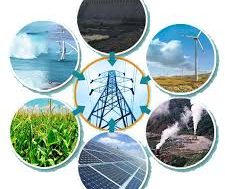
## **10. Renewable Energy Integration**
Rajasthan’s strong solar/wind potential is emphasized. Discoms should maximize procurement of **locally generated RE power** for cost and stability benefits.
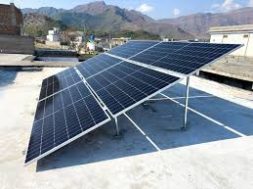
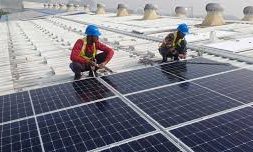
Progress under rooftop solar and KUSUM schemes is noted with consistent capacity additions.
—
For more information please see below link:
