



India Achieves Historic Clean Energy Milestone with 34.6 GW Non-Fossil Capacity Addition in FY26 – EQ





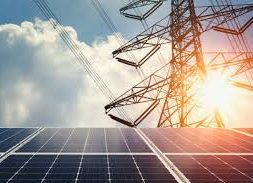


In Short : India added a record 34.6 GW of non-fossil fuel power capacity in the first eight months of FY26, according to the Economic Survey 2026. The achievement highlights rapid progress in renewable energy deployment, strengthening the country’s clean energy transition and reinforcing its commitment to reducing carbon emissions and building a sustainable power system.
In Detail : India has recorded its highest-ever addition of non-fossil fuel power capacity, with 34.6 GW installed in the first eight months of FY26, as highlighted in the Economic Survey 2026. This milestone reflects the accelerating pace of India’s energy transition and demonstrates strong momentum in the deployment of renewable and clean energy technologies across the country.
The non-fossil capacity addition includes major contributions from solar, wind, hydro, and other renewable sources. Solar energy continues to dominate new installations, supported by falling costs, improved technology, and strong policy backing, while wind power and hydro projects are also contributing to diversifying the clean energy mix.
This rapid capacity growth is a direct outcome of India’s long-term national targets for renewable energy and climate action. The government has set ambitious goals to expand non-fossil fuel capacity and reduce dependence on coal, aligning domestic energy policies with global climate commitments and sustainability objectives.
The record capacity addition highlights strong investor confidence in India’s renewable sector. Domestic and international investors are increasingly channeling capital into clean energy projects, attracted by stable policy frameworks, long-term power purchase agreements, and growing corporate demand for green electricity.
From a grid perspective, the large-scale integration of non-fossil capacity is reshaping how India’s power system operates. Grid operators are increasingly focusing on flexibility, storage solutions, and digital systems to manage variability and ensure reliable power supply amid rising renewable penetration.
The growth in clean capacity also supports India’s energy security by reducing reliance on imported fossil fuels. By expanding domestic renewable generation, India can stabilize energy costs, improve trade balance, and enhance resilience against global fuel price volatility.
In addition to environmental benefits, the renewable energy expansion is generating significant economic value. Large-scale projects are creating employment across manufacturing, construction, operations, and maintenance, while also stimulating growth in supporting industries such as energy storage, transmission infrastructure, and digital energy services.
The Economic Survey also reflects a broader structural shift in India’s power sector, where renewables are becoming central to capacity planning and future investments. Clean energy is no longer viewed as a supplementary resource but as the backbone of India’s long-term power strategy.
Overall, the addition of 34.6 GW of non-fossil capacity in FY26 marks a defining moment in India’s clean energy journey. It underscores the country’s ability to scale renewable deployment at record speed and strengthens its position as one of the world’s leading markets for sustainable and low-carbon energy development.
