



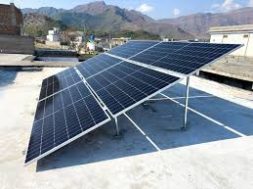
India’s solar market is entering a fast-paced era. FY2025 saw a record 37.9 GW added (28.6 GW utility, 7.9 GW rooftop), and analysts forecast ~42.5 GW new in 2026. Millions of smart meters (25+ million by Mar 2025) enable Time-of-Use tariffs, making when you use power as important as how much. Rooftop/C&I projects, energy storage and local manufacturing are surging. Emerging tech like AI-enabled inverters promises predictive maintenance and adaptive control. Here we will outline 2026’s key trends and challenges, then show how Growatt’s SPE and WIT hybrid inverters turn each challenge into a customer benefit.
Key 2026 Trends (India-specific)
Smart Meters & ToU Rollout: Rapid digitization – ~25 million smart meters installed by Mar-2025, paving the way for time-of-use and demand tariffs.
Rooftop & C&I Growth: Explosive rooftop growth (7.9 GW in FY2025, +72% YoY); ~8–9 GW more forecast for 2026. Commercial/industrial rooftop installations are also rising with new subsidies.
Storage Scale-Up: Major battery tenders and projects launched; e.g. hundreds of MWh of BESS tendered in 2025. Large 2026 storage projects are slated (a 3.53 GWh system by Adani, etc.).
Local Manufacturing (PLI): Domestic PV module capacity ~160 GW by Jan 2026 (PLI-driven), vastly outstripping (~40–45 GW/yr) demand. (Upshot: increased exports but price volatility due to raw material imports.)
Policy Signals: Auction strategy shifts to demand-driven procurement (38 GW added in 2025 vs. huge backlog of 43 GW). CEA’s new focus on grid-forming inverters indicates tighter grid codes ahead.

Technology Spotlight: AI in Solar
Modern solar+storage systems use AI for predictive maintenance and adaptive control. For example, cloud analytics can flag panel or inverter faults before they fail AI/ML algorithms are also being used for adaptive MPPT (tracking the best operating point under variable shading and for forecasting load and generation to optimize battery dispatch. In short, AI-enabled inverters and EMS will autonomously squeeze more kWh out of your system and avoid downtime.
2026 Challenges ((Problems → Risks)
Grid Integration: High rooftop penetration and variable output challenge grid stability (voltage/frequency).
Tariff Reforms: New ToU and demand charges penalize unmanaged peak usage.
Supply-Chain/Prices: Global polysilicon/cell shortages and raw material costs remain volatile.
Battery Lifecycle & Recycling: Handling end-of-life panels/batteries is nascent; EPR rules are evolving.
Regulatory Uncertainty: Changing net-metering rules, GST rates and policies can disrupt project economics.
Growatt SPE & WIT Series Solar Energy Storage Solutions
Grid-Tied Peak-Shave Mode (SPE) → Lower Demand Charges – e.g. a factory uses SPE’s peak-shaving discharge to cut a 500 kW utility peak by 100 kW, saving ≈₹25,000/month.
Timed harging & Discharging (SPE) → Maximized Self-Consumption – households schedule battery charging at off-peak rates; as a result, they use stored solar in evening peaks, slashing bills by 10–20%.
Multi-nit Parallel (WIT) → Scalable for C&I Loads – WIT supports up to 6 units, giving MW-scale capacity. In a big shop, parallel WIT units collectively shave large demand peaks and handle 3-phase loads with ease.
Fast Transfer & Gen Integration (WIT) → Uninterrupted Backup – WIT’s ultra-fast switchover and built-in genset input keep critical loads alive. A telecom tower, for example, stays powered by solar/battery when the grid fails, with diesel kicking in instantly.
Advanced Monitoring & AI-Ready (SPE/WIT) → Proactive Maintenance – Growatt’s inverters provide real-time data. If a panel underperforms, the app alerts the owner. This predictive insight prevents failures and optimizes maintenance, improving long-term yield.
Reactive Power Control → Grid Support – Both SPE and WIT can supply or consume VARs (up to unity power factor), helping stabilize local voltage. This feature is crucial as CEA pushes inverters to contribute to grid stability