



Massive Investment in Grid-Forming Batteries Key to Powering Renewable Energy Future – EQ

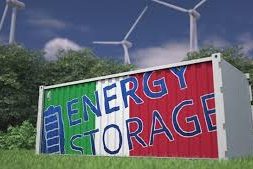





In Short : A new Wood Mackenzie report finds that $1.2 trillion is needed by 2034 for grid-forming battery storage to support 5,900 GW of new wind and solar capacity. These advanced batteries stabilize power grids as renewables rise. With demand surging 55%, the world faces a 1,400 GW shortfall—making urgent investment crucial for a reliable, clean energy transition.
In Detail : A recent report by Wood Mackenzie highlights the urgent need for $1.2 trillion in investment by 2034 to develop grid-forming battery energy storage systems (BESS). These systems are crucial to supporting an expected 5,900 GW of new wind and solar power globally. Without them, grid reliability and renewable integration will face serious challenges.
Unlike traditional battery systems that follow the grid, grid-forming batteries provide essential services such as frequency and voltage control. They can operate independently to stabilize the grid, making them vital for handling the variability of renewable energy sources like wind and solar.
The report warns of a 1,400 GW gap in grid-forming battery capacity over the next decade. This shortfall could undermine efforts to meet the growing electricity demand, which is projected to rise by 55% by 2034. With over 80% of future energy additions expected to come from renewables, robust storage infrastructure is a necessity.
Some regions are already pushing forward. In Asia-Pacific, countries like China, India, and Vietnam are seeing renewables meet nearly half or more of their peak demand, accelerating the need for grid-forming solutions. Pilot projects, such as the Red Sea development in Saudi Arabia, show that these systems can successfully support 100% renewable grids.
Although grid-forming batteries currently cost about 15% more than traditional systems, falling battery prices are improving their economic viability. Technological progress and economies of scale are expected to reduce these costs further, encouraging wider adoption across the power sector.
To support this transition, governments and regulators must create clear standards and incentives. Countries like the U.S., China, and Australia are already developing policies to encourage deployment. If scaled quickly and strategically, grid-forming storage can become a cornerstone of the global clean energy future.


