



Wireless Power Breakthroughs Bring EV Mats, Smart Rooms and Long-Range Charging Closer to Reality – EQ








In Short : Wireless power technology is rapidly advancing, bringing EV charging mats, smart power-enabled rooms, and long-range charging systems closer to mainstream use. New developments in inductive, resonant, and RF-based wireless energy transfer are improving efficiency, safety, and range. These innovations signal a future where devices, homes, and electric vehicles can be powered seamlessly without cables or traditional charging ports.
In Detail : Wireless power technology is evolving at a remarkable pace, transforming a once-theoretical concept into practical and scalable solutions. From electric vehicle charging mats to dynamic room-scale power delivery, the latest breakthroughs show strong potential to reduce reliance on cables and plugs. These innovations highlight a future where charging becomes automatic, invisible, and fully integrated into daily environments.
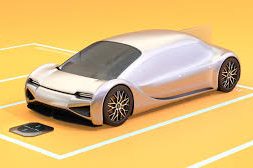
One of the most notable advancements is the development of wireless charging mats for electric vehicles. These mats allow drivers to simply park over a pad to initiate charging, eliminating the need for physical connectors. Improvements in coil alignment, power transfer efficiency, and heat management have made such systems more reliable for real-world use. Automakers and infrastructure companies are testing these solutions for commercial rollout.
Smart rooms equipped with embedded wireless power systems are also gaining traction. These environments use resonant or RF-based technologies to supply continuous power to devices such as sensors, lighting, and small electronics. As Internet-of-Things (IoT) adoption increases, such wire-free rooms could dramatically simplify device placement, reduce clutter, and support more flexible interior design.
Long-range wireless charging is emerging as the next frontier, enabling power transfer over distances far beyond traditional inductive systems. New techniques involving beamforming, radio waves, and high-frequency electromagnetic fields allow energy to reach devices several meters away. While still in early stages, this technology could one day power wearable gadgets, drones, or medical devices without physical contact.
These advances are supported by improvements in efficiency and safety standards. Researchers and companies are working to minimize energy loss, reduce electromagnetic interference, and ensure that wireless power systems comply with human-exposure regulations. These developments are critical for large-scale deployment in homes, offices, and public spaces.
The automotive industry stands to benefit significantly as wireless charging becomes practical for EVs. Not only can stationary mats simplify charging for consumers, but dynamic wireless charging—embedded in roads—could one day power vehicles while they move. This would reduce range anxiety and support lighter, smaller EV batteries, reshaping the economics and engineering of electric mobility.
Smart homes and smart buildings are also expected to transform with these technologies. Wireless power systems could eliminate the need for constant battery replacement in sensors and IoT devices. Such rooms would create more autonomous, energy-efficient ecosystems capable of supporting advanced automation and digital services.
Commercial and industrial applications are expanding as well. Long-range wireless systems could support factories filled with mobile robots, drones for inventory management, and medical facilities requiring sterile, cable-free environments. These use cases highlight the versatility of wireless power far beyond consumer electronics.
As research continues and more pilot deployments emerge, wireless power is moving steadily from concept to reality. The convergence of EV charging innovations, smart room capabilities, and long-range power transfer sets the stage for a future where energy flows freely and invisibly—making everyday life more seamless, efficient, and connected.
