


MNRE in 2025: Batteries Emerge as the Missing Link in India’s Renewable Energy Transition – EQ







In Short : In 2025, India’s renewable energy strategy increasingly highlighted battery storage as the critical enabler of large-scale clean power integration. As solar and wind capacity expanded rapidly, batteries emerged as the missing link for grid stability, peak management, and round-the-clock supply, shaping MNRE’s policy focus on storage deployment, market mechanisms, and domestic manufacturing.
In Detail : In 2025, India’s Ministry of New and Renewable Energy placed growing emphasis on energy storage as a core pillar of the country’s clean energy transition. With renewable capacity expanding at an unprecedented pace, the limitations of a generation-only approach became more evident, elevating batteries from a supporting technology to a strategic necessity.
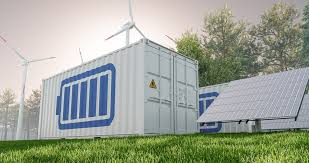
The rapid growth of solar and wind power brought increased variability into the power system, making grid balancing more complex. Batteries emerged as a practical solution to address intermittency by storing excess renewable energy during periods of high generation and releasing it when demand peaks or generation declines.
MNRE’s policy direction in 2025 reflected this shift, with storage increasingly integrated into renewable tenders, hybrid projects, and round-the-clock power procurement frameworks. These measures signalled a clear intent to move beyond standalone generation and toward firm, dispatchable renewable energy solutions.
Battery energy storage systems gained prominence for their fast response capabilities and modular deployment. Their ability to provide frequency regulation, ramping support, and peak shaving made them particularly valuable in managing short-term grid fluctuations and supporting distribution-level stability.
In parallel, long-duration storage options began to attract attention as essential complements to batteries. However, batteries remained at the centre of near-term deployment due to falling costs, improving performance, and their suitability for rapid scale-up across diverse applications.
The focus on batteries also aligned with India’s broader industrial strategy. MNRE supported efforts to promote domestic manufacturing of battery cells and components, aiming to reduce import dependence while building a local value chain that supports energy security and job creation.
Financing and market design emerged as critical enablers for battery deployment. Policy discussions in 2025 increasingly addressed revenue certainty, ancillary service markets, and long-term contracts to ensure bankability and attract private investment into storage projects.
Batteries also played a key role in advancing India’s decarbonisation goals by reducing reliance on fossil fuel-based peaking power plants. By enabling higher renewable penetration without compromising reliability, storage helped bridge the gap between climate ambition and grid realities.
Overall, MNRE’s evolving approach in 2025 underscored that batteries had become the missing link in India’s renewable energy transition. As renewable capacity continues to grow, sustained policy support and coordinated deployment of storage technologies will be essential to building a resilient, flexible, and future-ready power system.
