











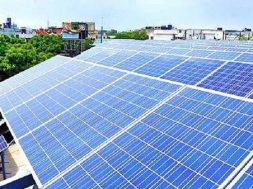

In Short : Industries are increasingly turning to solar energy solutions to address ongoing LPG supply challenges and price volatility. By adopting solar thermal and hybrid systems, businesses can reduce fuel dependency, lower operational costs, and ensure energy reliability. This shift highlights a growing trend toward sustainable alternatives that enhance resilience while supporting long-term environmental and economic objectives across industrial sectors.
In Detail : Industries are actively exploring solar energy solutions as a practical response to disruptions and rising costs associated with LPG supply. The volatility in availability and pricing of liquefied petroleum gas has created operational uncertainties, prompting businesses to seek more stable and sustainable alternatives for their energy needs. This shift is particularly noticeable in sectors that rely heavily on thermal energy for daily operations.
Solar energy, especially in the form of solar thermal systems, is emerging as a strong alternative for replacing LPG in various industrial processes. These systems can generate heat required for applications such as water heating, drying, and steam generation, making them highly suitable for industries like food processing, textiles, and pharmaceuticals.
One of the primary advantages of solar solutions is their ability to significantly reduce dependence on conventional fuels. By harnessing sunlight, industries can produce energy locally, minimizing exposure to external supply disruptions and global fuel price fluctuations. This enhances operational stability and ensures continuity in production processes.
In addition to energy security, cost savings are a major driver behind the adoption of solar alternatives. Although the initial investment in solar infrastructure can be substantial, the long-term benefits include lower fuel expenses and minimal operating costs. Over time, this leads to improved financial performance and better return on investment for businesses.
Hybrid energy systems are also gaining traction, where solar energy is integrated with existing LPG-based systems. This approach allows industries to gradually transition toward renewables without completely overhauling their infrastructure. It also ensures backup support during periods of low solar availability, maintaining uninterrupted operations.
Technological advancements have further improved the efficiency and reliability of solar thermal solutions. Modern systems are designed to deliver consistent performance, even under varying weather conditions, making them more adaptable to industrial requirements. This has increased confidence among businesses to adopt solar as a dependable energy source.
Government support and policy incentives are playing an important role in encouraging this transition. Various schemes and financial incentives are being introduced to promote the adoption of renewable energy technologies, making it easier for industries to invest in solar solutions and reduce their carbon footprint.
The environmental benefits of shifting from LPG to solar energy are also significant. By reducing reliance on fossil fuels, industries can lower greenhouse gas emissions and contribute to climate change mitigation efforts. This aligns with global sustainability goals and enhances corporate responsibility initiatives.
Overall, the move toward solar energy as a solution for LPG challenges reflects a broader transformation in industrial energy consumption. As businesses prioritize resilience, cost efficiency, and sustainability, solar solutions are becoming an integral part of their energy strategies, paving the way for a cleaner and more secure industrial future.
