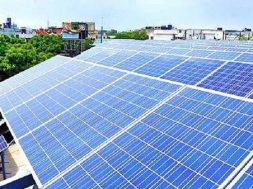





In Short : A new digital portal has been introduced to track rooftop solar installations in real time, enhancing transparency and efficiency. It enables stakeholders to monitor application status, installation progress, and energy output, supporting faster execution, improved governance, and wider adoption of rooftop solar under India’s clean energy initiatives. ([The Times of India][1])
In Detail : A new digital portal has been launched to enable real-time tracking of rooftop solar installations, marking a significant step toward improving transparency and efficiency in India’s renewable energy ecosystem. The initiative aims to streamline the monitoring of solar projects from application to execution.
The portal provides end-to-end visibility into the lifecycle of rooftop solar systems, allowing stakeholders to track key stages such as application submission, approvals, installation progress, and subsidy disbursement. This comprehensive monitoring capability ensures better coordination between multiple agencies involved in the process.
One of the key advantages of the platform is its real-time data access. Government authorities, distribution companies, and consumers can view up-to-date information on solar installations, helping reduce delays and improving accountability across the system.
The portal also enhances transparency by making data more accessible and standardized. This reduces information gaps, minimizes manual intervention, and allows for quicker resolution of issues that may arise during project implementation.
For consumers, the platform simplifies the rooftop solar journey by providing a single interface to track their application status and installation progress. This ease of access is expected to build trust and encourage more households to adopt solar energy solutions.
The initiative is closely aligned with PM Surya Ghar Muft Bijli Yojana, which aims to promote rooftop solar adoption across millions of households. Digital tools like this portal play a crucial role in scaling the programme efficiently and meeting ambitious installation targets.
Another important benefit is improved policy implementation. By collecting real-time data on installations and performance, policymakers can make informed decisions, identify bottlenecks, and adjust strategies to accelerate deployment across regions.
The portal is also expected to support better grid management by providing insights into distributed solar generation. With accurate data on energy output and system performance, utilities can plan infrastructure upgrades and manage load more effectively.
Overall, the launch of this real-time tracking portal represents a major step toward digitizing India’s renewable energy ecosystem. By combining transparency, efficiency, and data-driven decision-making, it is set to play a vital role in accelerating rooftop solar adoption and strengthening the country’s clean energy transition.