


Balancing Solar Expansion with Grid Stability and Discom Sustainability in India – EQ








In Short : India’s rapid solar expansion is transforming the power sector, but it also brings challenges related to grid stability and the financial health of distribution companies. Addressing these concerns requires stronger grid infrastructure, improved energy storage systems, and reforms in the distribution sector. A balanced approach will ensure renewable growth while maintaining reliable electricity supply and financial sustainability.
In Detail : India has been aggressively expanding its solar energy capacity as part of its commitment to clean energy transition and energy security. Solar power has become one of the fastest-growing segments of the country’s electricity sector due to falling technology costs, supportive government policies, and increasing investment from both public and private stakeholders. However, as solar installations grow rapidly, new challenges related to grid stability and the financial sustainability of distribution companies are becoming more prominent.
One of the major concerns associated with large-scale solar deployment is maintaining the stability of the power grid. Solar power generation depends on sunlight availability, which means output can fluctuate depending on weather conditions, time of day, and seasonal changes. These variations create operational challenges for grid operators who must continuously balance electricity supply with real-time demand.
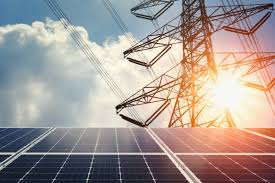
Grid infrastructure plays a crucial role in integrating large volumes of solar energy into the power system. Transmission networks must be strong and flexible enough to transport electricity from solar parks, which are often located in remote areas, to major demand centers. Without adequate transmission capacity and modern grid management systems, large-scale renewable integration may lead to congestion or power curtailment.
Energy storage technologies are increasingly being viewed as an essential solution to manage solar power variability. Battery storage systems can store excess electricity generated during sunny hours and release it during evening peak demand when solar generation declines. By smoothing out fluctuations in generation, energy storage helps maintain grid reliability and supports higher renewable energy penetration.
Another important challenge highlighted in the context of solar expansion is the financial health of electricity distribution companies, commonly known as discoms. Many discoms in India face financial stress due to factors such as high transmission losses, delayed payments, subsidized tariffs for certain consumer groups, and inefficient billing and collection systems. These financial constraints can affect their ability to procure renewable energy and invest in infrastructure improvements.
As solar power capacity increases, discoms must adapt their operational and financial models. Integrating renewable energy requires investments in advanced forecasting systems, grid modernization, and flexible generation resources. If distribution companies remain financially weak, it becomes difficult for them to support the transition toward a cleaner energy mix.
Policy reforms and regulatory support are therefore essential to ensure that solar expansion remains sustainable. Strengthening power purchase agreements, improving tariff structures, and promoting market-based electricity trading can help discoms manage costs while encouraging renewable energy development. Transparent policies can also attract long-term investment in solar infrastructure.
State renewable energy agencies, including those responsible for promoting solar adoption, have an important role in coordinating between developers, utilities, and policymakers. By planning renewable energy deployment alongside grid upgrades and financial reforms, these institutions can help ensure that solar growth remains balanced and efficient.
Overall, India’s solar energy expansion represents a significant opportunity to reduce carbon emissions and strengthen energy independence. However, achieving long-term success requires careful attention to grid stability and the financial sustainability of distribution companies. By investing in modern grid systems, energy storage technologies, and distribution sector reforms, India can continue to scale up solar power while maintaining a reliable and financially viable electricity system.
