


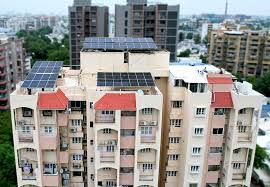







In Short : Ghaziabad has made rooftop solar provisions mandatory for new building plan approvals. The rule requires developers and homeowners to include space for solar panels during design submission. The initiative aims to promote clean energy, reduce grid dependency, and improve sustainability. Applicants must comply with the requirement before receiving approvals, encouraging large-scale rooftop solar adoption.
In Detail : Authorities in Ghaziabad have introduced a new rule making rooftop solar provisions compulsory for building plan approvals. Under the updated guidelines, applicants must include dedicated space for rooftop solar installations in their building maps. The measure aims to integrate renewable energy into urban planning and promote sustainable infrastructure development across the city.
The regulation has been implemented by the Ghaziabad Development Authority as part of efforts to increase decentralized solar power generation. By linking rooftop solar to plan approvals, authorities intend to ensure that new buildings are designed with renewable energy integration from the initial stage rather than retrofitting later.
The rule applies to new residential and other building proposals seeking approval. Plans submitted without provision for rooftop solar space may not receive clearance. This approach ensures that solar-ready infrastructure becomes a standard component of urban construction across Ghaziabad.
Officials have also introduced a security deposit mechanism linked to compliance. Applicants may be required to deposit a refundable amount based on plot size, which will be returned after installation of rooftop solar systems. This mechanism is intended to encourage timely implementation of solar installations.
The policy is expected to significantly increase rooftop solar adoption in the city. Integrating solar systems during construction reduces installation costs and improves efficiency. It also helps homeowners and developers benefit from long-term electricity savings and reduced reliance on conventional power sources.
The initiative also supports broader environmental goals, including reduction of carbon emissions and improved energy sustainability. Rooftop solar generation allows buildings to produce a portion of their electricity locally, lowering peak demand pressure on the grid. This contributes to a more resilient urban power system.
In addition to solar provisions, authorities are encouraging other sustainable infrastructure measures in building design. Integrating energy-efficient planning at the approval stage ensures that urban growth aligns with environmental priorities and resource conservation goals.
Urban planners believe that mandatory rooftop solar provisions will gradually transform Ghaziabad into a distributed clean energy hub. As more buildings adopt solar systems, the cumulative generation capacity across residential areas is expected to increase significantly, supporting renewable energy targets.
With rooftop solar now linked to building plan approvals, Ghaziabad joins a growing list of cities promoting decentralized renewable energy. The move is expected to encourage sustainable construction practices, reduce electricity costs, and accelerate adoption of clean power solutions across new developments.

