


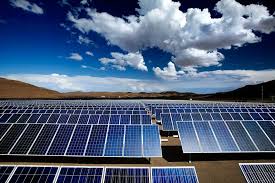







In Short ; India is poised to overtake the United States as the world’s second-largest solar market in 2026, reflecting the country’s accelerating clean energy momentum. Rapid capacity additions, supportive policies, and rising demand for clean power are driving growth, positioning India as a global solar powerhouse and reinforcing its central role in the global energy transition.
In Detail : India is on track to become the world’s second-largest solar market in 2026, marking a significant milestone in its clean energy journey. This shift highlights the country’s rapid progress in scaling solar capacity and strengthening its position in the global renewable energy landscape.
The projected rise is driven by sustained utility-scale solar deployment alongside growing rooftop and distributed solar installations. Strong annual capacity additions reflect a maturing market supported by policy clarity, competitive bidding mechanisms, and increasing investor confidence.
India’s solar expansion is closely linked to rising electricity demand from economic growth, urbanisation, and industrial development. Solar power has emerged as a cost-effective and scalable solution to meet this demand while reducing dependence on fossil fuels.
Government-led initiatives, long-term capacity targets, and transmission infrastructure development have played a crucial role in accelerating solar deployment. These measures have enabled faster project execution and improved grid integration of renewable energy.
Domestic manufacturing is also gaining momentum, supporting large-scale solar growth. Increased focus on local production of modules and components is strengthening supply chains, reducing import dependence, and creating a more resilient solar ecosystem.
The growth trajectory reflects increasing interest from global and domestic investors who view India as a high-potential renewable market. Stable demand, improving financing structures, and expanding corporate procurement of clean power are further boosting solar installations.
India’s rise in global solar rankings also underscores its broader climate ambitions. Expanding solar capacity is central to the country’s strategy for emissions reduction, energy security, and long-term sustainable development.
As solar penetration increases, complementary investments in energy storage, grid modernisation, and hybrid projects are becoming more important. These additions will help ensure reliability and maximise the value of large-scale solar deployment.
Overall, India’s expected move to second place globally signals a transformative phase for its energy sector. The development reflects strong execution, policy alignment, and market depth, positioning India as a key driver of global solar growth in the coming years.
