


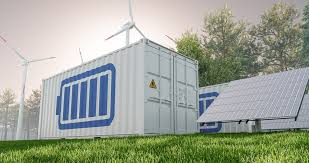







In Short : Battery pack prices have dropped to \$55/kWh, potentially sparking a boom in India’s energy storage market. With strong government support, cost-effective storage could accelerate renewable integration and reduce coal reliance. India aims to become the third-largest market for utility-scale batteries by 2030, supported by major investments from firms like Reliance and JSW Energy.
In Detail : Battery pack prices have fallen to an all-time low of \$55/kWh, marking a pivotal moment for global energy markets. For India, this decline could be a game-changer, unlocking large-scale adoption of battery energy storage systems (BESS) to support its rapidly growing renewable energy sector. Lower battery costs significantly improve the economic viability of storage solutions, making them more attractive to utilities and investors.
India is on track to become the world’s third-largest market for utility-scale battery storage by 2030. According to the International Energy Agency (IEA), the country could add nearly 9 GW of storage capacity by the end of the decade. This expansion will help manage the intermittency of renewable sources like solar and wind, which are set to dominate India’s future power mix.
The Indian government has launched several initiatives to support the energy storage ecosystem. These include viability gap funding (VGF) to offset high initial costs and policy incentives to encourage battery manufacturing. India’s first utility-scale battery storage system—20 MW/40 MWh—was recently inaugurated in Delhi, demonstrating real-world benefits such as improved grid stability and efficient power management during peak demand.
Declining battery prices also make solar-plus-storage projects more competitive than new coal-fired plants. As battery technology matures, the cost gap between renewable energy and fossil fuels continues to narrow. This creates a compelling case for states and private developers to invest in storage-backed renewable projects instead of adding new coal capacity.
Major corporate players are responding to the opportunity. Reliance Industries has secured a government-backed bid to manufacture advanced battery cells, with plans to scale production significantly. JSW Energy is also in talks with LG Energy Solution for a \$1.5 billion joint venture to manufacture batteries for both electric vehicles and grid applications, signaling growing confidence in India’s battery market.
With costs falling and policy momentum building, India is well-positioned to scale up its energy storage infrastructure. This shift not only strengthens energy security and reliability but also supports the country’s broader goal of achieving net-zero emissions by 2070. The battery revolution could be the catalyst that transforms India’s energy future.
