




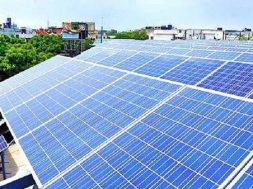






In Short : India’s rooftop solar installations recorded a sharp 123% year-on-year growth, reaching 7.1 GW in 2025, according to a recent report. The surge reflects strong policy support, rising consumer adoption, and growing interest in decentralized clean energy solutions. Residential, commercial, and industrial sectors are increasingly installing rooftop solar to reduce electricity costs and support sustainability goals.
In Detail : India’s rooftop solar market experienced remarkable growth in 2025, with installations rising 123 percent year-on-year to reach a total capacity of 7.1 GW. The expansion reflects increasing demand for decentralized renewable energy solutions as consumers and businesses seek cost-effective and sustainable electricity options.
Rooftop solar systems allow electricity to be generated directly at the point of consumption, typically on residential, commercial, and industrial building rooftops. This approach reduces reliance on centralized power generation while lowering electricity costs and transmission losses for consumers.
The rapid expansion of rooftop solar installations has been supported by government initiatives and incentives designed to encourage clean energy adoption. Programs led by the Ministry of New and Renewable Energy have played a significant role in promoting rooftop solar deployment across the country.
The residential sector has emerged as a major contributor to this growth, with many households installing rooftop solar systems to manage rising electricity costs and ensure reliable power supply. Subsidies and simplified installation processes have further accelerated adoption among homeowners.
Commercial and industrial consumers are also increasingly adopting rooftop solar to meet sustainability targets and reduce operational expenses. For businesses with large rooftop spaces, solar installations provide an efficient way to generate clean electricity and improve long-term energy cost stability.
Another factor driving growth is the improvement in solar technology and declining equipment costs. High-efficiency photovoltaic modules, advanced inverters, and better installation practices have made rooftop solar systems more accessible and economically viable.
Rooftop solar systems also contribute to strengthening the overall power grid by reducing peak demand and supporting distributed generation. When electricity is generated closer to the point of consumption, it reduces stress on transmission and distribution networks.
The rapid growth of rooftop solar aligns with India’s broader clean energy strategy and its efforts to expand renewable energy capacity. Decentralized solar installations complement large-scale solar parks and utility projects, creating a more balanced and resilient energy system.
As adoption continues to rise, rooftop solar is expected to play an increasingly important role in India’s energy transition. Continued policy support, technological innovation, and growing consumer awareness are likely to further accelerate the deployment of rooftop solar systems across the country in the coming years.
