




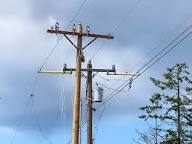
In Short : Expanding renewable energy capacity requires robust transmission infrastructure capable of handling variable power generation and long-distance electricity flow. Strengthening grids, deploying smart technologies, and building high-capacity corridors are essential to integrate solar and wind efficiently. Strategic planning, investment, and policy support will ensure reliability, reduce curtailment, and enable seamless delivery of clean power to demand centers nationwide.
In Detail : The Government has adopted planning and implementation approach that prioritises grid readiness, transmission expansion and energy storage deployment as integral components of development of Renewable Energy (RE) sources in the country. The steps required for integration of RE into the grid, while expanding the renewable capacity, have been undertaken to achieve the goal of energy security along with energy transition. To support this, several measures have been initiated, including strengthening the transmission infrastructure and grid operation, deploying smart grid technologies, and expanding energy storage systems to address supply intermittency and enable round-the-clock power delivery. These measures are outlined below:
(i) Strengthening of transmission infrastructure and grid operation:
- Development of Inter-State Transmission System (ISTS) and Intra-State Transmission Systems (InSTS) for evacuation of renewable energy. Transmission system has been planned for integration of over 500 GW RE capacity by the year 2030.
- As per the National Electricity Plan (Volume-II Transmission), the transmission network is planned to expand from about 5.04 lakh circuit km (as on February 2026) to 6.48 lakh circuit km by 2032, and transformation capacity from about 1429 GVA to 2345 GVA. Inter-regional transmission capacity is also planned to increase from 120 GW (as on February 2026) to 143 GW by 2027 and further to 168 GW by 2032.
- Ministry of New and Renewable Energy (MNRE) is implementing Green Energy Corridor (GEC) as Intra-State Transmission projects scheme in ten States namely Rajasthan, Karnataka, Andhra Pradesh, Himachal Pradesh, Madhya Pradesh, Kerala, Gujarat, Uttar Pradesh, Maharashtra and Tamil Nadu in two phases, i.e. GEC-I and GEC-II for evacuation of 44 GW of RE.
- Dedicated High Voltage Direct Current (HVDC) transmission links with bi-directional power flow capability are envisaged to enable efficient long-distance bulk transfer of renewable power and improve grid controllability.
- Central Electricity Regulatory Commission through the Connectivity and General Network Access to the Inter-State Transmission System (Third Amendment) Regulations, 2025 has introduced solar-hour and non-solar-hour connectivity, enabling optimal use of transmission infrastructure and promoting hybrid renewable projects combining solar, wind and BESS.
- Central Electricity Authority (Technical Standards for Connectivity to the Grid) Regulations have been notified to prescribe the minimum technical requirements for the RE generating plants to ensure the safe, secure and reliable operation of the grid.
- Flexibilization of thermal generation is mandated to address the variability of RE generation.
- Government has set up thirteen Renewable Energy Management Centres (REMCs) for better forecasting and real time monitoring of RE generation. The National Centre for Medium Range Weather Forecasting (NCMRWF), in coordination with the Indian Space Research Organisation (ISRO), provides advanced meteorological inputs to system operators and other stakeholders, which are utilized for renewable generation and demand forecasting, thereby supporting effective management of variability in RE generation.
- Hybrid RE power plants, Energy Storage Systems such as BESS (Battery Energy Storage System) and PSP (Pump Storage Project) are being promoted for mitigating variability in RE generation and provide adequate frequency support to the grid.
(ii) Deployment of Smart Grid Technologies:
- Advanced grid support technologies such as Static Synchronous Compensators (STATCOMS), Synchronous Condensers (SynCONs) and other Flexible AC Transmission System (FACTS) devices are planned to enhance voltage stability, improve system strength, and support reliable integration of renewable energy.
- Automatic Generation Control (AGC) and Ancillary Services (SRAS/TRAS) have been implemented for frequency regulation and balancing.
- Under the Revamped Distribution Sector Scheme (RDSS), Supervisory Control and Data Acquisition (SCADA) works have been sanctioned for distribution system covering 455 towns.
(iii) Development of Energy Storage Systems (ESS):
- ESS, as part of the power system, is defined under clause (50) of Section 2 of the Electricity Act, 2003.
- Implementation of two Viability Gap Funding (VGF) schemes for the development of approximately 43.8 GWh of Battery Energy Storage Systems.
- For incentivizing the ESS, 100% waiver of Inter-State Transmission System (ISTS) charges has been extended for co-located BESS projects commissioned till June, 2028 and hydro Pumped Storage Plants (PSPs) where construction work is awarded up to June, 2028.
- Ministry of Power has issued Tariff Based Competitive Bidding (TBCB) Guidelines for procurement of storage capacity and stored energy from Hydro PSP, Battery Energy Storage Systems and Firm and Dispatchable RE (FDRE) to facilitate standardized and transparent bidding process.
- Ministry of Heavy Industries is implementing a Production-Linked Incentive (PLI) Scheme with an outlay of ₹18,100 crore for establishing 50 GWh of Advanced Chemistry Cell manufacturing capacity, of which 10 GWh is earmarked for grid-scale storage.
- Off-stream closed-loop pumped storage schemes, irrespective of the quantum of capital expenditure have been exempted from the requirement of concurrence by the CEA.
- CEA in November, 2025, has issued revised guidelines for formulation of Detailed Project Reports for Pumped Storage Schemes wherein it has been stipulated that Clearance of Inter-state Aspects is not required for PSPs.
- Government is providing budgetary support for the cost of enabling infrastructure (roads; transmission line from power house to the nearest pooling point, including upgradation of pooling substations of State or Central Transmission Utility; railway siding; ropeway; communication infrastructure) for development of Hydro PSP.
This Information was given by The Minister of State in the Ministry of Power, Shri Shripad Naik, in a written reply in the Rajya Sabha today.