









In Short : India’s commercial and industrial renewable energy capacity is projected to reach 57 GW by FY28, driven by corporate decarbonization goals, falling technology costs, and supportive policies. Rising demand for green power among industries is accelerating investments in captive and open-access projects, strengthening India’s clean energy transition and reducing dependence on conventional power sources.
In Detail : India’s commercial and industrial (C&I) renewable energy segment is poised for substantial expansion, with installed capacity expected to touch 57 GW by FY28. The projected growth reflects strong momentum among businesses seeking cost-effective and sustainable power solutions to meet both operational and environmental objectives.
The C&I segment has emerged as a key growth driver within India’s renewable energy landscape. Unlike utility-scale projects that supply power to distribution companies, C&I installations cater directly to industries and commercial establishments through captive generation or open-access mechanisms. This structure enables companies to secure long-term energy cost stability while lowering carbon footprints.
Corporate sustainability commitments are playing a pivotal role in this expansion. Many large Indian and multinational firms operating in India have set ambitious net-zero or renewable energy procurement targets. Transitioning to green power not only enhances environmental credentials but also aligns with global supply chain sustainability requirements.
Declining costs of solar modules, wind turbines, and energy storage technologies have made renewable energy increasingly competitive with conventional grid power. For many industrial consumers, especially those with high electricity consumption, renewable solutions now offer clear economic advantages over traditional fossil fuel-based sources.
Policy support has also been instrumental in accelerating C&I adoption. Various state-level regulations permit open-access procurement, allowing industries to source renewable power directly from developers. Simplified procedures, banking provisions, and waivers on certain transmission charges further enhance project viability.
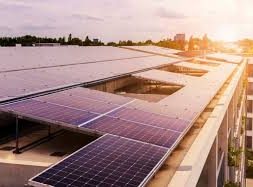
The majority of upcoming C&I additions are expected to come from solar energy, particularly rooftop and ground-mounted captive installations. Hybrid solutions combining solar and wind, along with storage integration, are gradually gaining traction to ensure round-the-clock power supply for energy-intensive operations.
The rapid growth of the C&I segment contributes significantly to India’s broader renewable capacity targets. By reducing reliance on distribution utilities and conventional generation, industries are actively participating in the country’s decarbonization journey while improving energy security.
However, challenges such as regulatory uncertainties, grid connectivity constraints, and financing complexities may influence the pace of expansion. Ensuring policy consistency and streamlined approvals will be critical to maintaining investor confidence and sustaining growth momentum.
Overall, the projection of 57 GW C&I renewable capacity by FY28 underscores a structural shift in India’s energy consumption patterns. As industries increasingly adopt clean energy solutions, the commercial and industrial segment is set to become a cornerstone of the nation’s renewable energy transformation.
