India Ranks third globally in Renewable Energy Installed Capacity: Shri Pralhad Joshi – EQ





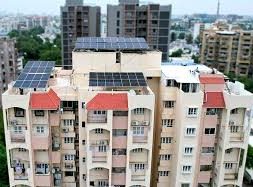


in Short : India has emerged as the world’s third-largest country in renewable energy installed capacity, according to Union Minister Pralhad Joshi. The milestone follows record additions in solar, wind, and other non-fossil sources. Rapid infrastructure expansion, policy support, and strong investments helped India surpass several nations, strengthening its global clean energy leadership and accelerating progress toward 2030 climate and energy transition targets.
In Detail : India surpasses Brazil to secure third position in Global Renewable Energy Rankings: Shri Joshi
India reached its highest-ever renewable energy share in electricity generation: Shri Joshi
Union Minister for New and Renewable Energy and Consumer Affairs, Food and Public Distribution, Shri Pralhad Joshi said India ranks third globally in Renewable Energy Installed Capacity, according to the Renewable Energy Statistics 2026. He said India has moved ahead of Brazil in the ranking. The International Renewable Energy Agency released the statistics as of December 2025.
While addressing media persons here today, Shri Joshi said India achieved a total non-fossil capacity addition of 55.3 GW during FY 2025–26.
The Minister also highlighted that in July 2025, India reached its highest-ever renewable energy share in electricity generation. The renewables met 51.5% of the country’s total electricity demand of 203 GW. He also said that a total of 283.46 GW of capacity from non-fossil fuel sources has been installed in the country as on 31.03.2026.
Shri Joshi said India’s total power generation during 2025-26 (up to March 2026) reached 1,845.921 BU. The share of non-fossil fuels in total generation reached 29.2% in 2025-26 (538.97 BU). India achieved the milestone of 50% of its cumulative electric power installed capacity from non-fossil fuel sources in June 2025, five years ahead of the 2030 target set under its Nationally Determined Contribution (NDC) to the Paris Agreement.
In line with the Hon’ble Prime Minister’s announcement at COP26, the Ministry of New and Renewable Energy is working towards achieving 500 GW of installed electricity capacity from non-fossil sources by 2030.
So far, a total of 283.46 GW of capacity from non-fossil fuel sources has been installed in the country as on 31.03.2026. This includes 274.68 GW Renewable Energy (150.26 GW Solar Power, 56.09 GW Wind Power, 11.75 GW Bio Energy, 5.17 GW Small Hydro Power, 51.41 GW Large Hydro Power) and 8.78 GW Nuclear Power capacity.
India stands 3rd globally in Renewable Energy Installed Capacity (as per IRENA RE Statistics 2026 with data as on December, 2025).
| Total Renewable Energy Installed Capacity (GW) | |
| Country | Capacity |
| China | 2258.02 |
| USA | 467.92 |
| India | 250.52 |
| Brazil | 228.20 |
| Germany | 199.92 |
| Japan | 134.53 |
| Canada | 110.51 |
| World | 5149.28 |
Non-Fossil capacity addition in 2025-26 is 55.29 GW and this is the highest increase in any year. (Previously the highest increase was 29.5 GW during 2024-25).
Distributed Renewable Energy (DRE) from Solar has emerged as a significant component of this growth, contributing 16.3 GW (36%) out of the 44.61 GW installed during 2025–26. This includes 7.6 GW under PM KUSUM and 8.7 GW from rooftop solar.
During 2025-26, Wind energy capacity of 6.05 GW has been installed, which is the highest ever capacity addition in a single year. (In the previous year, the wind capacity addition was 4.15 GW).
Renewable Energy (RE) installed capacity has increased 3.59 times since 2014 – increased from 76.38 GW in March 2014 to 274.68 GW in March 2026 i.e. an increase of 198.30 GW.
Solar energy installed capacity has increased 53.28 times since 2014 – increased from 2.82 GW in March 2014 to 150.26 GW in March 2026, i.e. an increase of 147.44 GW.
Wind energy installed capacity has increased 2.66 times since 2014 – increased from 21.04 GW in March 2014 to 56.09 GW in March 2026, i.e. an increase of 35.05 GW.
Wind Turbine Manufacturing Capacity has increased from 10 GW in 2014 to about 24 GW, as on 31.03.2026.
Solar Module Manufacturing Capacity has increased from 2.3 GW in 2014 to about 172 GW, as on 31.03.2026.
In FY 2025–26, an expenditure of Rs. 24,176.68 crore has been incurred against the B.E. of 26,549.38 crore and R.E. of 25,301.22 crore, which is ~91.0% of the B.E. and ~95.5% of the R.E.
Key Policy Implemented by the Ministry of New & Renewable Energy (MNRE) in FY 2025-26
The GST rate on renewable energy devices & parts for their manufacture was reduced from 12% to 5%, w.e.f. 22.09.2025. This will benefit domestic buyers: project developers, DISCOMs, rooftop solar installers, and captive users, by reducing the landed cost of solar equipment.
BCD exemption extended to capital goods for lithium-ion cell manufacturing for Battery Energy Storage Systems (effective 2 February 2026 to 31 March 2028). This will reduce the reliance on imported battery packs, primarily from China, strengthening India’s Atmanirbhar Bharat goals in the energy sector.
Renewable Energy Equipment Import Monitoring System (REEIMS) portal, launched in October 2025 enabled real-time tracking of import patterns of critical renewable energy equipment, ensuring greater supply chain transparency, regulatory compliance, and prevention of misuse of imported components.
On the recommendation of MNRE, MoP has revised the RCO compliance framework under the Energy Conservation Act, 2001, superseding the earlier October 2023 notification. State-level RPO targets are subsumed within this unified RCO framework, eliminating dual obligations under the Electricity Act, 2003.
CERC (Sharing of Inter-State Transmission Charges and Losses) (Fourth Amendment) Regulations, 2025 issued on 26.06.2025 to provide ISTS waiver trajectory for RE and BESS projects, including provision of extension of waiver in case of delay on account of Force Majeure event including non-availability of transmission system or for reasons not attributable to the Renewable Energy Generator.
CERC (Connectivity and General Network Access to the Inter-State Transmission System) (Third Amendment) Regulations, 2025 introduced a non-solar hour connectivity framework. This will help in better utilization of the transmission network.
Guidelines for Virtual Power Purchase Agreements (VPPA) issued by CERC. VPPA provides an additional instrument to enable the Designated Consumers to meet their RCO targets.
Pilot Scheme for Contract for Difference (CfD) for RE projects of 500 MW capacity issued by MNRE. The CfD mechanism, a globally proven framework, guarantees stable revenues to renewable energy developers while preserving competitive, market-based price discovery.
The National Policy on Geothermal Energy was issued in September 2025, providing a comprehensive strategic framework to accelerate the exploration, development, and commercial utilization of geothermal resources across the country.
The Ministry has formally inaugurated the Jaiv-Urja Mitra programme under the Human Resource Development (HRD) framework. This strategic initiative is designed to bolster the renewable energy value chain by providing specialized technical training and capacity-building for key stakeholders, including biomass aggregators, feedstock depot operators, and Compressed Biogas (CBG) technicians.
The Ministry has issued the modified “Solar Systems, Devices, and Components Goods Order, 2025” (Quality Control Order (QCO) 2025) via Gazette Notification dated 27th January 2025. This revised order supersedes erstwhile QCO, 2017 and incorporates the latest versions of Indian Standards for Solar PV Modules, Storage Batteries, and SPV Inverters. The order also provides standards for the determination of efficiency of SPV modules.
Progress Under Major Programmes of MNRE
A. Solar
India crossed the 150 GW milestone with cumulative installed solar capacity of 150.26 GW as on 31-03-2026.
150.26 GW includes 110.43 GW of Utility scale, 25.73 GW of Roof top and 14.10 GW of KUSUM & off grid projects.
Highest ever solar capacity addition in a FY of 44.61 GW, against the target of 34 GW. This is almost double than 23.83 GW, added in FY 2024-25, the previous highest solar capacity addition in a FY.
Highest ever solar capacity addition in a single month (6.66 GW).
Highest ever addition in distributed solar in a single FY of 16.31 GW, which includes 8.71 GW of Rooftop Solar and 7.67 GW of KUSUM projects, almost 36% of the total installed capacity in this FY 2025-26. Cumulative rooftop installations benefited more than 42 lakh households till now in the country, with PMSG touching 34.3 lakhs including 22.7 lakhs in a single FY 25-26
Out of the remaining 28.30 GW (44.61 – 16.31), ~15 GW of capacity are of PPA route projects and remaining ~13 GW are from C & I including captive projects 8.71 GW of Rooftop includes 6.72 GW of PMSG: MBY projects and remaining ~2 GW is from C & I sector projects·
In total, the C & I sector, including captive, contributed to about 15 GW (~34 %) of solar capacity addition in this FY.
Other achievements:
| Particulars | In FY 2025 | In FY 2026 | Steps taken |
| No of installations in PMSG: MBY | 8.51 lakh
(10.9 Lakh households benefitted) |
18.71 lakh
(~2x increase)
(22.7 lakh Households benefitted) |
· City accelerator program has been initiated in 41 cities to accelerate RTS in cities.
· Inter ministerial convergence with MOHUA for SHG involvement, MOC for cooperatives and MoRD/MoP for involving Panchayats in RTS installations · Net metering agreement has been subsumed into the National portal without requirement of separate process under Rights of Consumers Rules 2020 · Centralized digital portal with auto feasibility improvised with reporting. · Awareness creation with focus on collateral free soft loans through banks- 13.7 lakh loan applications sanctioned and 11.3 lakhs disbursed. |
| Installations in PM KUSUM | 3.66 GW | 7.67 GW
(~2x increase) |
Out of the 25 lakh pumps installed/solarized till date, 13.93 lakh pumps were done so in FY 25-26 itself
Extension of KUSUM 1.0 till 31st March 2027 · Awareness creation through 4 regional meets and workshops across the country including Seva Pakwada.
MH has set up a Guinness World Record this year for single solar pumps installed in a single month (49.5K) · |
| Solar PV module manufacturing capacity (cumulative) | ~74 GW | ~172 GW
(~98 GW added In FY 2025-26) |
ALMM pathways for Ingot-wafer announced for June 2028.
8 out of 12 PLI manufacturers have started production in one or the other value chain.
BCD exemption on some solar glass components like sodium antimonate.
ADD/CVD on Solar glass has been imposed during the FY to reduce dumping.
BCD exemption on import of basic raw material for manufacturing of encapsulant and tinned copper inter-connect extended.
GST equipment rate reduced from 12% to 5%
DCR monitoring through NISE -DCR portal strengthened.
Import monitoring through the REIMS portal has started. |
| Imports of solar modules | USD 2,152 mil | USD 758 mil*
(~3x decrease) |
|
| C& I Sector capacity addition | ~10 GW | ~15 GW
(~1.5x increase) |
DCR Module Availability across manufacturers has improved
Green Energy Open Access rules notified by states
Green Term Ahead Market active |
*Till Jan. 2026.
Under the PM KUSUM scheme, the number of pumps installed/solarised in FY 2025–26 reached 13.94 lakh pumps, with 7,672.35 MW capacity added during the year and a cumulative installed capacity of 13,111.87 MW. The scheme has contributed to estimated savings of 12.59 million tonnes of CO₂ emissions and 734.52 million litres of diesel.
B. Wind
Highest-ever annual wind capacity addition of 6.05 GW during FY 2025-26 (46% higher than FY 2024–25 (4.15 GW).
Cumulative installed wind power capacity has crossed 56 GW positioning India as 4th rank in terms of Global Installed Wind Turbine Capacity.
Expenditure of allocated Rs. 500 crore under Wind GBI Scheme.
C & I sector including captive contributed to about 4.5 GW (~75 %) of the total wind capacity addition in this FY Wind turbine (Nacelle and Hub) manufacturing capacity increased to 24 GW from 18 GW.
Facilitation of MoD clearance for wind power projects. About 66 GW sites was identified across windy states and classified as 1) No clearance required zone 2) Clearance required zone and 3) No WTG Zone. This facilitated developers for identifying sites and reducing project risk. Close coordination with MoD and MHA resulted in faster project clearances.
A Task Force has been constituted on 15th January, 2026 in order to address issues relating to Regulatory & Land/Right of Way, Grid Allocation and construction for Wind Power Projects including members from Grid India, CTU, NIWE, State Departments, MoP and industry associations. This will facilitate better coordination with various State Govts to ensure timely execution of the projects and reduce bottlenecks.
Amendment to Procedure for inclusion/updating Wind Turbine Model in the Approved List of Models and Manufacturers of Wind Turbines (ALMM) issued on 31st July 2025 and an Standard Operating Procedures (SoP) was issued on 29.10.2025.
C. National Bioenergy Programme
Based on the recent revisions to the National Bioenergy Programme, the Bioenergy Division has implemented significant facilitation measures to accelerate Waste-to-Energy (WtE) and Biomass projects (FY 2021-22 to 2025-26).
Here are the key inputs regarding the revisions:
v Revisions in Waste-to-Energy (WtE) Guidelines (2025)
Staggered CFA Release: To improve liquidity, Central Financial Assistance (CFA) is released in two stages (50% upon submission of Consent to Operate Certificate; 50% at 80% capacity) instead of upon final completion.
Performance-Based Subsidy: Pro-rata CFA disbursement for plants operating at 50-80% capacity, with no subsidy if PLF is below 50%.
Streamlined Inspection: Joint inspections are now conducted by SSS-NIBE and State Agencies.
v Revised Biomass Programme Guidelines (2025)
Reduced Documentation: Simplified, reduced requirements for briquette/pellet manufacturers to enhance Ease of Doing Business.
Flexible Sale Agreements: Replaced mandatory two-year pellet contracts with general sale agreements, allowing for market adaptation.
Technological Shift: IoT-based monitoring or quarterly data submission is now permitted instead of mandatory SCADA systems.
Performance-Based Evaluation: Reduced operational verification from 3 days to a single 10-hour continuous operation.
With these reforms, the division was able to ramp up release of CFA in FY 2025-26 beyond 50% of the total budget outlay of Rs 998 Cr.
D. Green Energy Corridor
Under the Green Energy Corridor programme of the Ministry of New and Renewable Energy, seven states have successfully completed Green Energy Corridor Phase-I, strengthening the grid for renewable energy integration.
To support renewable energy evacuation, the Government released around ₹787 crore during 2025–26 for development of transmission infrastructure under the programme.
The Ministry has declared about 345 GW of Renewable Energy Potential Zones beyond the 500 GW transmission plan, enabling advance transmission planning and providing visibility to developers and investors.
Planning for the next phase of the Green Energy Corridor is underway, which will expand transmission infrastructure to more states and support further growth of renewable energy across the country.
E. National Green Hydrogen Mission
The National Green Hydrogen Mission (NGHM) was approved by the Cabinet with an initial outlay of ₹ 19,744 crore up to the year 2029-30. The objective of the Mission by 2030 is to produce at least 5 Million Metric Tonnes per Annum of Green Hydrogen. Further, the expected outcomes of the Mission include RE capacity addition of 125 GW, over Rs. 8 lakh crores in total investments, creation of over 6 lakh full time jobs and aversion of 50 MMT per annum of CO2 emissions.
The National Green Hydrogen Mission (NGHM), with a total outlay of ₹19,744 crore, marked transformative progress in FY 2025-26, positioning India as a global leader in cost-competitive green fuel production.
v Breakthrough Price Discovery & Tenders
This fiscal year witnessed record-breaking price discoveries that have significantly narrowed the gap between green and grey hydrogen:
- SECI Green Ammonia Tenders: SECI successfully conducted auctions for the production and supply of 724,000 MTPA of Green Ammonia to fertilizer units.
- Lowest Ammonia Price: The competitive bidding process reached a record low price discovery of ₹49.75 per kg for supply to IFFCO in Odisha. Th weighted average is Rs. 53.27 per kg Green Ammonia
- Numaligarh Refinery (NRL) Tender: A historic milestone was achieved in refinery tenders, with NeuEN Green Energy (a BPCL-Sembcorp JV) discovering a price of ₹279 per kg for the supply of 10,000 tonnes per year of Green Hydrogen to NRL in Assam.
v Strategic Agreements & Industrial Transition
- GAPA & GASA Signing: In March 2026, the government finalized the exchange of Green Ammonia Purchase Agreements (GAPA) and Green Ammonia Supply Agreements (GASA) for 670,000 tons per annum. These 10-year agreements provide demand certainty and are expected to save approximately $2.5 billion in foreign exchange.
- Industrial Commissioning: JSW commissioned 3,600 MTPA of Green Hydrogen production capacity in November 2025.
- Refinery Integration: Projects for 30,000 MTPA of Green Hydrogen were awarded across major refineries, including IOCL, BPCL, HPCL, and NRL. Apart from Numaligarh, the prices were in the range of Rs. 330-350 per kg (without taxes)
v Standards and Regulatory Framework
To facilitate trade and ensure safety, the Ministry established several critical frameworks:
- Certification Scheme: The Green Hydrogen Certification Scheme of India was officially launched in April 2025.
- New Standards: Official standards for Green Ammonia and Green Methanol were issued in February 2026.
- International Alignment: A total of 122 standards were published or adopted by entities like BIS and PESO to regulate the hydrogen value chain.
v SIGHT Program & Infrastructure
- Manufacturing Incentives: Under the Strategic Interventions for Green Hydrogen Transition (SIGHT) program, incentives have been awarded for 3,000 MWPA of domestic electrolyser manufacturing capacity.
- Green Hydrogen Hubs: Three major ports—Kandla, Paradip, and Tuticorin—have been designated as Green Hydrogen Hubs to serve as centers for production and export.
v Ecosystem Development
- Pilot Projects: Multiple pilots were sanctioned across hard-to-abate sectors, including ₹208 crore for transport (37 vehicles and 9 refueling stations) and ₹84 crore for the steel sector.
- Hydrogen Valleys: Four Hydrogen Valley Innovation Clusters (Odisha, Kerala, Pune, and JHV) were sanctioned with a total of ₹170 crore.
- Skill Development: To support this growing industry, 3,955 personnel were specifically trained in Green Hydrogen technologies during the year.
F. Small Hydro Power (SHP) Development Scheme for the period FY 2026-27 to FY 2030-31
The Union Cabinet chaired by the Prime Minister Shri Narendra Modi approved the ‘Small Hydro Power (SHP) Development Scheme for the period FY 2026-27 to FY 2030-31’ with an outlay of ₹ 2584.60 crore for installation of Small Hydro Power (SHP) Projects of an approximate capacity of 1500 MW. The scheme will support small hydro projects (between 1-25 MW capacity) to come up in different states and will especially benefit hilly and North Eastern states with high potential for such projects.
This Scheme will rejuvenate the Small Hydro Power sector and will help in exploiting the available potential at a much faster pace. SHP projects are environmentally sustainable, as they avoid large-scale land acquisition, deforestation, and displacement of communities. It will also promote socio-economic development of remote areas by boosting local investment, apart from creating long-term employment with project lifespans typically ranging from 40 to over 60 years.
G. R&D
Geothermal Energy: MNRE sanctioned five (05) projects during July–August 2025, including a pilot production plant, resource assessment, and a solar–geothermal hybrid plant, to establish techno-economic viability.
Solar PV R&D: At Indian Institute of Technology Bombay, MNRE-supported research has achieved 30% in silicon tandem solar cells at the National Centre for Photovoltaic Research and Education (NCPRE) and 26% efficiency in perovskite solar cells, marking progress in next-generation solar technologies.
Energy Storage: In December 2025, MNRE sanctioned a project to Indian Institute of Technology Roorkee for development of sodium-ion battery technology as a cost-effective alternative to lithium-based systems.
Solar Calibration Facility: A National Primary Standard Facility has been established at CSIR–National Physical Laboratory, enabling high-accuracy calibration (0.35% uncertainty) and placing India among globally recognised WPVS laboratories, reducing reliance on overseas services.
H. Skill Development & Capacity Building in Renewable Energy
v Achievements (FY 2025–26)
Under the Skill development & capacity building programmes of the Ministry, 1,24,793 candidates were trained in solar, wind, and green hydrogen sectors to support installation, operation, and maintenance of RE projects. This includes 7,380 under HRD (5,301 placed), 1,13,458 under PM-SGMBY, and 3,955 under NGHM.
Fellowship and internship programmes facilitated transition of beneficiaries into industry roles, entrepreneurship, and other career pathways, strengthening the highly qualified manpower pipeline for the RE sector.
v New Initiatives (FY 2025–26)
- Vayumitra Skill Development Programme (Phase II) launched for training Wind Farm Engineers, including a Training of Trainers (ToT) component.
- Jaiv-Urja Mitra Skill Development Programme launched to develop manpower for roles such as Agri-Residue Aggregator, Biomass Depot Operator, and O&M Technicians for CBG and biomass-based industries, promoting rural employment.
IV. Generation Progress of RE
- Total Electricity Generation (including RE) during 2025-26 is about 1845.921 BU as against 1828.877 BU during the same period last year showing a growth of 0.93%.
| Fossil Fuel Generation (71%) | Non Fossil (29%) and RE |
| · The electricity generation from Fossil Fuel Sources in the country during 2025-26 is 1306.951 BU as against the generation of 1363.069 BU during corresponding period previous year showing the negative growth of 4.12%.
· Coal based power generation during 2025-26 is 1250.189 BU showing negative growth of 3.69% over the previous year same period. |
· Share of Non-Fossil Generation in Total Generation has been around 29.2%.
· During 2025-26, Share of RE Generation (Including Large Hydro) in Total Generation has been 26.2%
· Generation from Renewable Sources (Excl. Large Hydro) during 2025-26 is 308.813 BU as against the generation of 255.009 BU during corresponding period previous year showing growth of 21.10%.
· Wind based generation has been 106.089 BU showing significant growth of 27.29%.
· Solar based generation has been 173.525 BU showing growth of 20.38%.
· Wind+Solar is 276.614 BU which constitutes 15.14% of total generation. |