


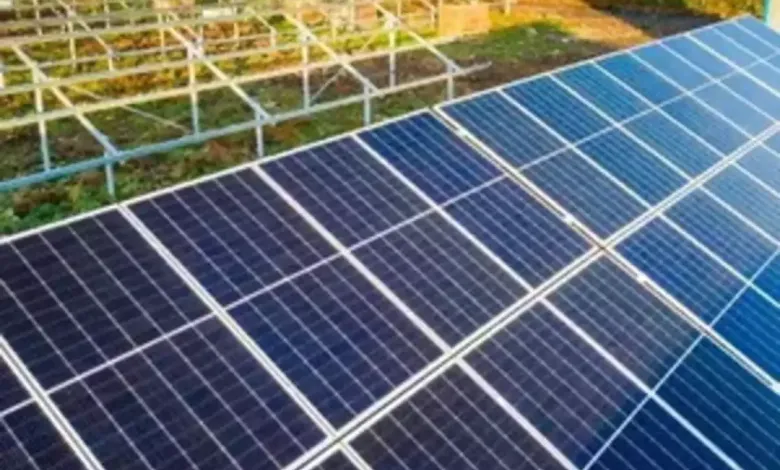







In Short : Kanpur is fast emerging as a solar power hub, achieving 64 MW of rooftop solar capacity across residential, commercial, and industrial installations. The city’s rapid adoption of solar reflects growing awareness of renewable energy benefits, government incentives, and private sector participation, positioning Kanpur as a model for urban solar deployment and India’s clean energy transition.
In Detail : Kanpur has established itself as a significant solar power hub, reaching a cumulative rooftop solar capacity of 64 MW. This growth underscores the city’s commitment to renewable energy adoption and highlights the potential of urban solar deployment in India.
The expansion covers residential, commercial, and industrial rooftops, demonstrating broad-based participation. Households, businesses, and factories are increasingly investing in solar installations to reduce electricity costs and carbon footprints.
Government incentives and policy support have been instrumental in accelerating rooftop solar adoption. Subsidies, net metering schemes, and simplified approval processes have made it easier for individuals and organisations to install solar systems.
Private sector participation has also played a key role, with solar developers and service providers driving installations, financing solutions, and maintenance services. Collaborative efforts between government and industry have strengthened adoption rates.
Rooftop solar contributes to decentralised energy generation, reducing pressure on the central grid. By producing electricity locally, Kanpur is able to improve energy reliability and reduce transmission losses.
The city’s growing solar capacity aligns with India’s broader renewable energy targets. Rooftop solar is a vital component of national strategies aimed at expanding clean energy, reducing fossil fuel dependence, and supporting sustainability goals.
Economic benefits of rooftop solar adoption include reduced electricity bills for consumers and potential revenue generation through net metering. Solar investments also create employment opportunities in installation, maintenance, and project development.
Technological advancements, such as high-efficiency solar panels and smart inverters, have improved system performance, making rooftop solar more attractive and cost-effective for urban consumers.
Kanpur’s success in rooftop solar development positions it as a model for other cities seeking to expand renewable energy deployment. The city’s achievements highlight the growing role of urban solar in India’s clean energy transition and sustainable urban planning.
