




In Short : Gujarat has secured a position among India’s top five states in battery energy storage deployment, reflecting its growing role in clean energy transition. With increasing renewable capacity and strong policy support, the state is rapidly expanding its storage infrastructure. Large-scale projects and future pipelines indicate Gujarat’s potential to become a national leader in energy storage systems.
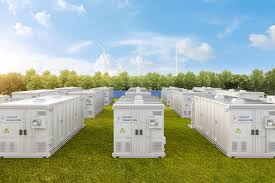
In Detail : Gujarat has firmly positioned itself among the top five states in India for Battery Energy Storage System (BESS) deployment, highlighting its increasing importance in the country’s evolving clean energy landscape. This achievement reflects the state’s proactive approach toward integrating renewable energy with advanced storage technologies to ensure reliable power supply.
According to recent government data, Gujarat currently holds around 77 MWh of operational battery storage capacity, placing it fifth after states like Bihar, Karnataka, Chhattisgarh, and Rajasthan. ([The Times of India][1]) This ranking underscores both its current progress and the significant scope for further expansion in the sector.
One of the key drivers behind Gujarat’s growth is its strong renewable energy base, particularly in solar and wind power. As renewable energy generation is inherently intermittent, the need for battery storage becomes critical to balance supply and demand, reduce curtailment, and enhance grid stability.
The state is also witnessing a surge in large-scale battery storage projects. Gujarat Urja Vikas Nigam Ltd (GUVNL) has already approved tariffs for over 1,665 MW / 3,330 MWh of standalone BESS projects, forming part of a broader 2,000 MW / 4,000 MWh tender. ([The Times of India][1]) This marks one of the largest battery storage procurement initiatives in India.
Private sector participation is playing a major role in accelerating deployment. Companies such as Adani Green Energy and Rajesh Power Services are actively developing utility-scale battery storage projects, further strengthening the ecosystem and bringing in technological expertise.
A major highlight is the development of one of India’s largest battery storage systems at Khavda in Gujarat. This mega project is expected to significantly boost grid reliability and support round-the-clock renewable energy supply, positioning the state as a hub for large-scale energy infrastructure.
Looking ahead, Gujarat’s battery storage pipeline remains robust, with several gigawatt-scale projects under development. Experts estimate that the state may require around 55 GWh of storage capacity in the coming years to effectively manage its growing renewable energy generation.
Policy support and early adoption of storage tenders have also given Gujarat a competitive edge. The state was among the pioneers in initiating battery storage auctions, helping attract investments and accelerate project implementation.
Overall, Gujarat’s inclusion among the top five states in battery storage is not just a milestone but a stepping stone. With strong industrial demand, expanding renewable capacity, and ambitious future projects, the state is well positioned to emerge as a leader in India’s energy storage and clean power transition.