






In Short : Climate change is causing significant disruptions in India’s weather cycles, including rising temperatures, erratic monsoons, and increased extreme weather events. These changes are affecting agriculture, water resources, and livelihoods. Scientific bodies like the India Meteorological Department highlight the urgent need for adaptation and mitigation strategies to address growing environmental and economic challenges.
In Detail : The Government has noted changes in the weather cycle due to climate change. It is documented comprehensively in the Ministry of Earth Sciences (MoES) report titled “Assessment of Climate Change over the Indian Region”. The report is available at https://link.springer.com/book/10.1007/978-981-15-4327-2. The climate change assessment report by the MoES has assessed the impact of climate change across the country, covering all aspects of regional climate change, including the climatic extremes across India. Based on available climate records, the report documents that the surface air temperature over India has risen by about 0.7°C during 1901–2018, accompanied by an increase in atmospheric moisture content. The sea surface temperatures in the tropical Indian Ocean increased by about 1°C during 1951–2015. Clear signatures of human-induced changes in climate have emerged across the Indian region on account of anthropogenic greenhouse gases (GHGs) and aerosol forcing, as well as changes in land use and land cover, which have contributed to an increase in climatic extremes. The complex interactions among components of the Earth system, coupled with a warming environment and regional anthropogenic influences, have contributed to increases in the frequency of localized heavy rainfall events, the occurrence of droughts, and the intensity of tropical cyclones over the past few decades. Future projections of regional climate, performed under different climate change scenarios, to indicate robust changes in the mean, variability, and extremes of several key climatic parameters over the Indian subcontinent and adjoining areas (e.g., land temperature and precipitation, monsoons, Indian Ocean temperature and sea level, tropical cyclones, Himalayan cryosphere, etc.).
The India Meteorological Department (IMD) has also released a web-based “Climate Hazard & Vulnerability Atlas of India” prepared for the 13 most hazardous meteorological events, which cause extensive damage and economic, human, and animal losses. The same can be accessed at https://imdpune.gov.in/hazardatlas/abouthazard.html. This atlas helps State Government authorities and disaster management agencies identify the hotspots and plan and take appropriate action to tackle extreme weather events. This product helps build climate change-resilient infrastructure. Further, IMD also studied changing rainfall patterns in the country and extremes in the recent 30 years at different spatial scales (States and Districts). A total of 29 reports on “Observed Rainfall Variability and Changes” for various States/UTs were published and are publicly available.
The climate change assessment report by the MoES mentioned in the reply to (a) has assessed the adverse effects of global warming. The report documents that, amidst global warming, the surface air temperature over India has risen by about 0.7°C from 1901–2018, and the sea surface temperatures in the tropical Indian Ocean have increased by about 1°C from 1951 to 2015. This has led to increased monsoon variability, extremes, etc. Regions, e.g., Central India, northern India, and the Western Himalayas, have experienced a rise in extreme precipitation events; north and northwest India and neighbouring Central India have experienced moderate droughts and expansion, as well as semiarid regions, while coastal regions are at increased risk of cyclone-related disasters. In particular, the Himalayan region has shown elevation-dependent warming, changes in western disturbances, snowfall patterns, retreating glaciers, a rise in short-lived precipitation extremes, etc.
The climate change assessment report by MoES mentioned above also addresses the rise in sea levels and provides insights into its potential adverse impact on coastal States. The MoES report noted that based on published scientific studies, the sea level in the Indian Ocean was observed to be rising at a rate of about 1.7 mm/year during the last century (1900–2000) and even more rapidly in the north Indian Ocean at the rate of about 3.3 mm/year since 1993-2015. Research suggests that sea-level rise varies significantly across the Indian coast. An assessment based on gridded satellite altimeter records (1993-2020) for a few selected locations along the Indian coast is given below:
| Location |
Trend (mm/yr) |
| Mumbai | 4.59±0.19 |
| Mormugao | 4.30±0.17 |
| Kochi | 4.10±0.16 |
| Chennai | 4.31±0.26 |
| Visakhapatnam | 4.27±0.33 |
| Paradip |
4.43±0.36 |
The Government has taken several initiatives to protect the country from the adverse effects of climate change and rising sea levels. The Government is undertaking several efforts to assess and minimize the impact of climate change and rising sea levels. The multi-faceted approach is aimed at addressing the potential impacts of climate change on the country’s weather patterns, focusing on adaptation, mitigation, and resilience-building. Key initiatives include:
- National Action Plan on Climate Change (NAPCC): Launched in 2008, it outlines eight national missions that focus on promoting sustainable development while addressing climate change. These include solar energy, energy efficiency, sustainable agriculture, and water conservation missions. The NAPCC, prepared under the guidance of the Prime Minister’s Council on Climate Change, also includes measures to assess and manage the impact of sea level rise on coastal areas. The National Adaptation Fund for Climate Change (NAFCC) is aimed at climate adaptation, including coastal areas. The NAFCC finances measures to protect vulnerable coastal communities and improve their resilience to sea-level rise. Besides, the Coastal Regulation Zone (CRZ) notifications also aim to manage and regulate development in coastal areas. The CRZ regulations help protect coastal ecosystems and manage the impact of human activities, thus reducing vulnerability to rising sea levels.
- State Action Plans: States have also developed their own climate action plan in line with the NAPCC, addressing region-specific vulnerabilities such as extreme weather events (floods, droughts) and shifting monsoon patterns.
- Disaster Management and Early Warning Systems: India has strengthened disaster preparedness through its National Disaster Management Authority (NDMA), which works closely with the India Meteorological Department (IMD) to minimize the impacts of extreme weather events (e.g., cyclones, heatwaves).
- Climate-Resilient Agriculture: The Government has promoted climate-resilient agricultural practices, such as drought-resistant crops, improved water management, and changes in cropping patterns to adapt to shifting rainfall and temperature patterns.
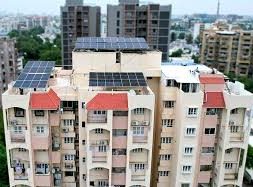
- Renewable Energy Development: India is aggressively expanding renewable energy sources, particularly solar and wind, to reduce greenhouse gas emissions and transition to a low-carbon economy. The country aims to achieve 500 GW of non-fossil fuel-based energy capacity by 2030.
- Water Conservation: With increasing concerns over water scarcity, the Government has initiated various programs like the Jal Jeevan Mission and National Water Mission to improve water management and ensure sustainable water use, especially in drought-prone regions.
- Policy and Financial Frameworks: The Government has also integrated climate change considerations into national policies and budgets, aligning with international climate agreements (e.g., the Paris Agreement). This includes setting emission reduction targets and focusing on climate financing for vulnerable sectors.
These efforts are aimed at reducing vulnerabilities and preparing the country for combating the diverse impacts of climate change, from altered monsoon patterns to more frequent extreme weather events.
This information was submitted by Union Minister of State (Independent Charge) for Earth Sciences and Science & Technology, Dr. Jitendra Singh in Rajya Sabha on 19 March 2026.